
Measurement, tracking & reporting
Ecommerce analytics
Understand the numbers behind your next business decision.
We help DTC brands and retailers define what to measure, review how data is collected, and build reports around the questions that matter to their business.
Which numbers can your team use to make a decision?
More reports do not always mean a clearer picture. Start by identifying what is missing, what is being compared, and what your team needs to know.
Reports show different totals
Review definitions, time periods, collection methods, and attribution settings before comparing the numbers.
Purchases or funnel steps are missing
Check which actions are recorded, when events fire, and whether the agreed data reaches the report.
Teams use different definitions
Agree on what revenue, conversion rate, and average order value mean in each report.
Dashboards do not guide action
Connect each view to a business question, a responsible person, and a next step.
Build a measurement plan your team can use.
Measurement planning
Turn commercial questions into defined metrics, events, data sources, and reporting requirements.
Tracking review and implementation
Review the existing setup and implement the agreed changes to ecommerce events and campaign measurement.
Validation and reconciliation
Check selected events and transaction data, investigate unexpected differences, and document what each source measures.
Documentation and ownership
Give your team a clear record of definitions, responsibilities, and the checks needed when the store changes.
Work with the tools that fit your measurement needs.
We start with your current setup and choose the tools around the measurement plan. The agreed scope may include Google Analytics 4, Google Tag Manager, store analytics, and reporting in Looker Studio or Power BI.
Server-side tracking when it fits the scope. When selected, server-side tagging adds a server environment for processing and routing measurement data. We assess the architecture, implementation work, and ongoing ownership before including it.
Reports that answer a question and show their source.
Organize the agreed data around store performance, the buying journey, and channel reporting. Make definitions, comparison periods, and important limitations visible so the team can interpret each view.
Store performance
How are orders and sales changing within the reporting definition we agreed?
Buying journey
Where do customers stop progressing through the measured purchase steps?
Products and categories
Which parts of the catalog need a closer review?
Channel reporting
How do the selected sources assign credit, and what changes when their assumptions differ?
Separate attributed results from incremental impact.
Attribution assigns credit according to a model and the data available to it. Measuring incremental impact asks what would have happened without the intervention. We clarify the question first and assess whether a separate study is feasible.
A defined process, with measurement throughout.
Measurement connects the work from the initial review to delivery and ongoing decisions.
Descubrir
Review your business questions, current reports, data sources, and measurement gaps.
Definir
Agree on metric definitions, priority events, report requirements, and responsibilities.
Desarrollar
Implement the selected tracking and reporting work, then validate it against the agreed specification.
Entregar
Review the outputs with your team, document limitations, and hand over the plan for maintaining measurement.
A measurement setup with a practical handover.
Use the findings to decide what needs investigation, which data gaps need work, and where a design, campaign, or operational review should begin.
- Plan de medición: a documented link between business questions, metrics, events, and sources
- Tracking specification and review: the selected implementation requirements, validation results, and remaining issues
- Reports or dashboards: the agreed views, definitions, refresh expectations, and interpretation notes
- Handover and priorities: responsibilities, maintenance guidance, and the next questions to investigate
Del blog
Lecturas adicionales.
Artículos de nuestro blog sobre los temas que abarca esta página.
- Herramientas de análisis · Artículo
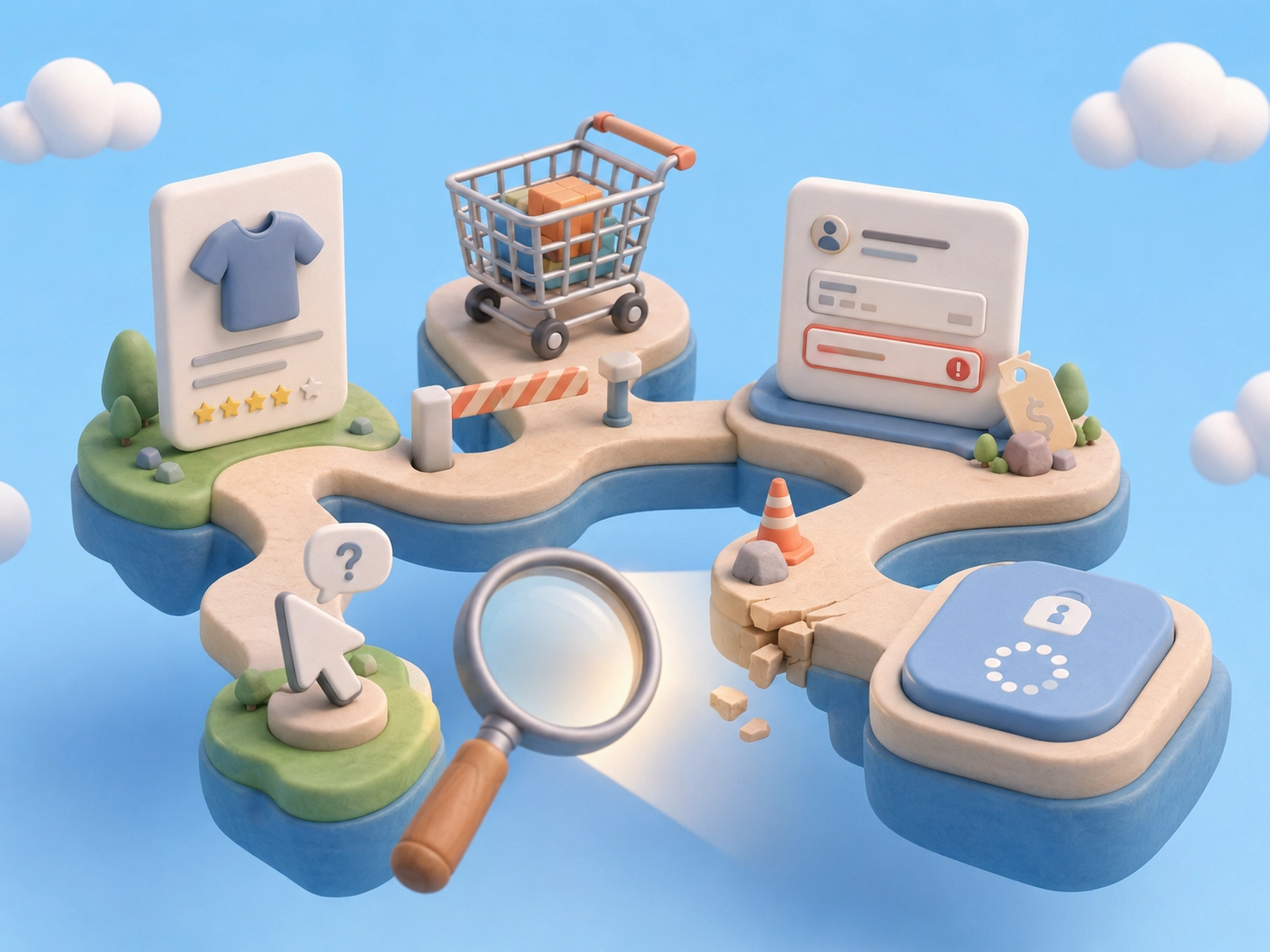
Fricción en el comercio electrónico: Cómo encontrar los problemas de UX que ralentizan las ventas
Un mayor tráfico se traduce en mejores resultados cuando tu tienda facilita la compra. La fricción en el comercio electrónico surge cuando los clientes dudan, hacen clic repetidamente, se confunden, pierden la confianza o abandonan la compra antes de finalizarla. Este artículo muestra cómo detectar estos puntos de fricción mediante un análisis de usabilidad sencillo, datos y el comportamiento del cliente, antes de intentar adivinar qué rediseñar. - Experiencia del cliente · Artículo

Comprender las necesidades de sus clientes mejora su tienda.
Conoces tu negocio, pero tus clientes ven tu tienda de forma diferente. Descubre cómo una sencilla investigación de usuarios te ayuda a mejorar tu tienda con información real de tus clientes, no con suposiciones. - Experiencia del cliente · Artículo

Convierta el menú de su tienda en su mejor herramienta de ventas.
El menú de tu tienda no debe ser solo una lista de productos. Debe ayudar a los clientes a comprender qué buscan, qué opciones tienen y qué producto se ajusta mejor a sus necesidades. Este artículo explica cómo la navegación, las páginas de categorías, los filtros y las páginas de productos pueden guiar a los clientes a tomar mejores decisiones de compra. - Modelos de negocio y crecimiento · Artículo

La guía definitiva para el alojamiento de WooCommerce: No elijas por precio, elige por peso.“
Deja de elegir tu hosting por precio. Calcula el "Peso Real" de tu tienda y descubre la ruta exacta de infraestructura de Hostinger a AWS. - Modelos de negocio y crecimiento · Artículo
Del lanzamiento a la escala: mi interpretación del problema del arranque en frío desde la perspectiva de la experiencia del usuario
Una lectura centrada en la experiencia del usuario (UX) de The Cold Start Problem: cómo las empresas emergentes pasan del lanzamiento a la capacidad de defensa a través de la investigación, el diseño y el crecimiento. - Experiencia del cliente · Artículo

UX es emoción: Los 7 hábitos de las tiendas que convierten en 2025-2026
Este artículo analiza los siete hábitos de comportamiento detrás de las tiendas de comercio electrónico más exitosas de 2025. Aprenda a diseñar para el flujo emocional, reforzar la confianza en cada paso y convertir su tienda en un motor continuo de impulso, claridad y conversión.
Questions about ecommerce analytics
We define the scope around your questions and current setup. It may include a measurement review, metric and event definitions, selected implementation work, reports, and a documented handover.
We review the tools and access you already have before recommending changes. The proposal identifies which sources can be used, what needs configuration, and where additional implementation is required.
They can use different collection methods, definitions, attribution settings, and reporting periods. We investigate the differences relevant to your decisions and document both expected variation and issues that need correction.
That depends on your measurement requirements, existing setup, and ability to maintain the server environment. We assess it as an implementation option rather than a requirement for every store.
An attribution report assigns credit under a model. Estimating the additional sales caused by a campaign requires a suitable measurement study. We clarify that distinction and assess feasibility before scoping the work.
Analytics defines and reviews the measurement used to understand performance. CRO investigates improvements to the buying experience and evaluates selected changes. The two services share a measurement plan and can work together.
The scope depends on the number of sources, implementation work, report requirements, and handover or ongoing support. We review those needs before preparing a proposal.
Connect measurement with the work that follows.
What does your team need to understand?
Tell us about your store, current reports, and the decisions you need to make.
We will help define the measurement work worth prioritizing.
Programar una reunión¿Prefieres escribir primero? Cuéntanos sobre tu proyecto.